Chicago wedding transportation covers three things: the couple’s getaway car, the wedding party’s vehicle, and shuttles for guests. Coordinated chauffeured vehicles tie those pieces together so the day moves on schedule — the couple arrives composed, the party stays together for photos, and guests get between the hotel, the ceremony, and the reception without parking, surge fares, or someone getting lost on Lake Shore Drive.
A wedding has more moving parts than any other trip we drive. Multiple groups, multiple addresses, a hard ceremony start time, and a photographer waiting. This guide walks through who needs a ride, which vehicles fit which job, how to build the timeline, how many vehicles you actually need, and the Chicago-specific logistics — downtown hotels, the lakefront, Navy Pier, the suburbs — that shape every plan.
Who needs transportation on a wedding day?
Four groups usually need a planned ride: the couple, the wedding party, the immediate family, and out-of-town guests. Mapping each group early is what keeps the day from turning into a parking-lot scramble an hour before the ceremony.
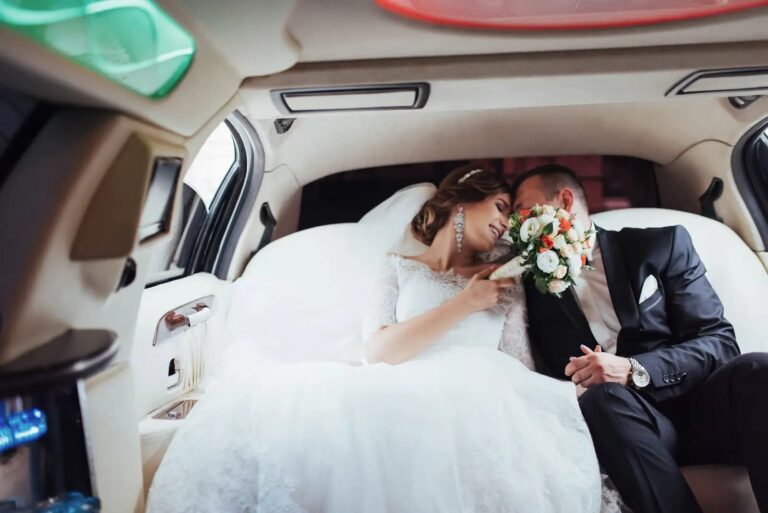
- The couple. The most important ride of the day. A dedicated sedan or SUV carries the couple from the getting-ready location to the ceremony, then to photos, then to the reception — and the getaway car at the end of the night.
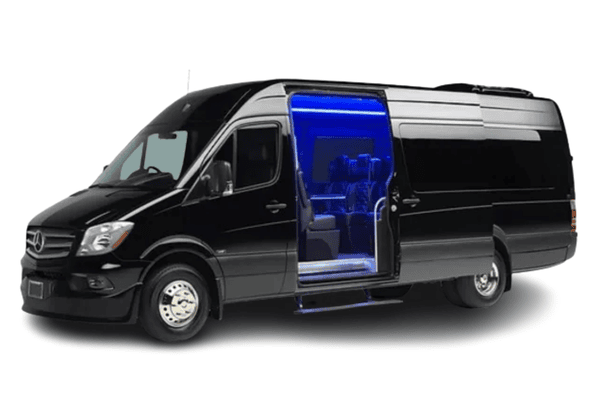
- The wedding party. Bridesmaids, groomsmen, and the people in the photos travel together so the group arrives at the same time and stays on the photographer’s schedule. One Sprinter usually does it.
- Parents and immediate family. Often overlooked. A second vehicle for parents and grandparents keeps the people who matter most close to the action and out of their own cars.
- Out-of-town guests. If your guests are staying at a downtown hotel and your venue is on the lakefront or in the suburbs, a guest shuttle removes the parking problem and the drinking-and-driving problem in one move.
The couple and the party are non-negotiable. Family and guest shuttles are where most couples decide how much coordination they want to hand off, and they are also where a single chauffeured plan saves the most stress.
Choosing the right vehicles
Match the vehicle to the job: a luxury sedan or SUV for the couple, a Sprinter van for the wedding party, and a Sprinter or shuttle run for guests. The vehicle is not about showing off; it is about getting the right number of people to the right place comfortably and on time.
- The couple’s car. A Lincoln sedan or a full-size SUV. Quiet, private, and easy to step in and out of in a gown or a suit. The SUV gives more room for a dress and a few extra people if needed.
- The wedding party. A Mercedes Sprinter keeps eight to fourteen people together with room for dresses, a garment bag, and a glass of champagne on the way. One vehicle, one drop-off, everyone arrives at once.
- Guests. A Sprinter running loops between the hotel and the venue, or a larger shuttle for bigger counts, turns “how does everyone get there” into a non-issue.
Browse the full lineup on the fleet page to see sedans, SUVs, and Sprinters side by side, and read the dedicated how many vehicles guide when you are ready to settle on counts.
Building the transportation timeline
The transportation timeline is built backward from the ceremony start time, with buffers for Chicago traffic, photo stops, and the loading and unloading that always takes longer than couples expect. Get the times wrong and everything downstream slips; get them right and the day runs itself.
A workable plan sequences the getting-ready pickup, the wedding-party arrival ahead of the couple, the couple’s arrival with minutes to spare, any photo stops along the lakefront or Riverwalk, and the reception transfers — then the guest shuttle loops and the end-of-night returns. Each leg needs a buffer; downtown loading zones and a gown do not move on a rideshare clock.
We break the full hour-by-hour structure down in the wedding transportation timeline guide, including a sample schedule you can adapt to your own ceremony time.
How many vehicles do you need?
Most Chicago weddings use two to four vehicles: one for the couple, one for the wedding party, and one or two more for family and guest shuttles depending on counts and venues. The exact number comes down to your party size, how spread out your guests are, and whether the ceremony and reception share a venue.
A single-venue wedding with a small party might need only the couple’s car and one Sprinter. A wedding with a downtown hotel block, a lakefront ceremony, and a separate reception can justify a couple of vehicles plus a shuttle running loops all evening. The trick is counting heads per group and per address, not guessing.
The how many limos for a wedding guide walks through the math group by group so you can land on a count with confidence.
Chicago venues and logistics
Chicago weddings live and die on logistics: downtown loading zones, lakefront and Riverwalk photo stops, Navy Pier access, suburban distances, and the traffic and parking that come with all of it. A local chauffeur who knows the city is the difference between a smooth day and a chaotic one.
- Downtown hotels. Most out-of-town guests stay along Michigan Avenue, the Loop, or River North. These are short hops to most ceremony sites, but loading zones are tight and timed, so a chauffeur who stages correctly keeps the curb moving.
- The lakefront and Riverwalk. The Museum Campus, North Avenue Beach, and the Chicago Riverwalk are the city’s signature photo backdrops. Building a short photo stop into the route between the ceremony and reception is one of the best uses of a chauffeured vehicle.
- Navy Pier. A popular reception and photo destination with its own access and drop-off rules; see our Navy Pier service area for how we handle it.
- The suburbs. Many couples marry in the city and celebrate in Oak Park, Naperville, or the North Shore, or the reverse. The extra distance is exactly why a guest shuttle earns its place.
- Traffic and parking. Lake Shore Drive, expressway congestion, and event-day street closures all eat time. Buffered scheduling and a chauffeur who knows the alternates protect your ceremony start.
How far ahead should you reserve?
Reserve your wedding transportation well in advance — peak Saturdays in Chicago wedding season fill early, so the further ahead you lock in the date, the better your choice of vehicles. ‹confirm exact lead time›
Once you have a confirmed venue and ceremony time, transportation is one of the safer pieces to settle early. Reserving sooner protects the specific sedan, SUV, and Sprinter you want, keeps the whole day on one coordinated plan and one accountable team, and gives you time to adjust counts as your guest list firms up. If your date falls on a peak summer or early-fall Saturday, treat it as an early decision rather than a last-minute one.
Your wedding-transport planning checklist
Work through these decisions in order. Each one narrows the next, so by the end you have a complete, coordinated plan rather than a pile of separate rides.
- Confirm the anchors. Lock the ceremony and reception venues and the ceremony start time. Everything is built backward from these.
- List every group that needs a ride. Couple, wedding party, parents and family, and out-of-town guests — with a head count for each.
- Map the addresses. Getting-ready location, ceremony, photo stops, reception, and the guest hotel block.
- Match vehicles to groups. Sedan or SUV for the couple, a Sprinter for the party, shuttle runs for guests. See the fleet.
- Decide on a guest shuttle. Yes if your guests and venue are far apart or parking is tight; it removes the biggest logistics headache.
- Build the timeline backward. Use the timeline guide and add buffers for traffic and loading.
- Settle the vehicle count. Confirm numbers with the how-many guide.
- Reserve early. Lock the date with one provider so the whole day runs on a single plan. Reserve here.
- Share the final schedule. Give the dispatch team your venues, times, and a day-of contact a week out.
And a quick reference for who rides in what:
Frequently asked questions