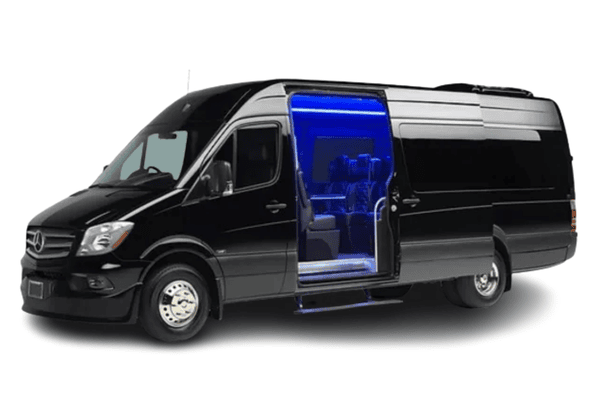
A chauffeured van or SUV is the right way to do a brewery or winery tour. Your group visits several spots in a day, everyone tastes freely, and one sober, professional chauffeur drives the whole route — so nobody has to choose between joining in and getting everyone home safely.
That single decision shapes the entire day. With the driving handled, the planning becomes the fun part: which taprooms and tasting rooms to visit, how long to linger at each, where to break for lunch, and how to time it all so you finish relaxed rather than rushed. This guide walks through how a tasting-tour day actually works, the Chicago-area scenes worth building it around, and how to put a route together that runs smoothly.
Why you need a chauffeur for a tasting tour
The whole point of a tasting tour is that everyone gets to taste — and that only works if nobody in the group is the designated driver. A brewery or winery day means several pours at several stops over several hours. Someone behind the wheel either has to sit out the experience entirely or risk driving impaired. Neither is acceptable.
A chauffeur removes the choice. The driving is a separate job, handled by a sober professional who is not part of the celebration. There is no designated driver missing out, no quiet resentment over who drew the short straw, and no DUI risk on the way home. Just as important, you are not parking, navigating between unfamiliar suburbs, or figuring out a rideshare for a group of ten when a taproom is in an industrial pocket with no easy pickup. The chauffeur knows the route, holds the vehicle, and keeps the day moving.
How a tour day actually works
A tasting tour runs on a planned route: the chauffeur picks your group up, drives a set sequence of stops, waits at each one, breaks for lunch, and brings everyone home at the end. Here is the shape of a typical day.
It starts with pickup at a single address — a home, a hotel, or wherever the group gathers — so everyone leaves together and on time. From there the chauffeur follows a planned route of stops arranged in a sensible order, usually two to four tasting rooms depending on how long you want at each. At every stop the vehicle waits or holds ‹confirm wait policy› while you taste, tour, and take your time, then it is ready when you are. Somewhere in the middle the route works in lunch, either at a brewery with a kitchen or a nearby restaurant, because tasting on an empty stomach is a short day. At the end, the ride home is the easy part: everyone is together, nobody is driving, and the chauffeur drops the group back where the day began.
Chicago-area brewery and winery scenes
The city is dense with brewery districts, while most of the wineries and distilleries sit out in the suburbs and beyond — which is exactly why a tour route benefits from a vehicle that can cover ground.
Inside the city, Chicago’s brewery scenes cluster in neighborhoods rather than spreading out. Areas like Logan Square, Avondale, the West Loop and Fulton Market, Pilsen, and the North Side along Ravenswood and Lincoln Avenue each have a tight run of taprooms within a short drive of one another, which makes for an efficient in-city route. For wine and spirits, the options open up as you head out: there are urban wineries and craft distilleries within the city, and a wider spread of tasting rooms across the suburbs and the further countryside toward the state line and into nearby Michigan and Wisconsin wine country. A van handles those longer legs comfortably.
We keep specific venues general here on purpose — taprooms open, move, and change their tour hours often, and we’d rather build your route around current, confirmed stops ‹confirm current partners› than send a group to a room that has changed its schedule. Tell us the neighborhoods or the style of day you want and we’ll shape the route around it. A tour like this fits naturally under our parties & celebrations service.
The right vehicle for your group
For most tasting tours the right vehicle is a Sprinter van for groups of roughly 10 to 16, or a full-size SUV for a smaller party. The vehicle decides how the day feels as much as the stops do.
A Sprinter van keeps a larger group together, with room to stand up, stretch out, and talk between stops, plus space for the bottles and growlers people inevitably buy along the way. A full-size SUV suits a smaller group of up to six or so who want something more intimate. Either way the whole party travels in one vehicle, which matters more than it sounds: no splitting into cars, no caravan getting separated on the highway, no one stop where half the group is still circling for parking. You can compare capacities and look over the lineup on the fleet page.
A sample tasting-tour day
Here is one way a full day might run. Treat it as a sample to adapt — your route, stop count, and timing will depend on the group and the neighborhoods you choose.
Planning your tour, step by step
A good tour comes down to five decisions: the route, the reservations, the headcount, the timing, and a realistic pace. Work through them in order and the day falls into place.
- Route & order. Choose your neighborhoods or wine-country direction, then sequence the stops so you’re not doubling back. Two to four stops is the sweet spot for most groups.
- Reservations at each stop. Confirm tour times and reserve space for the group at every venue — don’t assume walk-in space for a party of twelve.
- Headcount. A firm number sets the vehicle. A Sprinter covers 10 to 16; an SUV covers a smaller group. Count everyone before you reserve.
- Timing. Budget enough time at each stop — roughly an hour to ninety minutes — plus a real lunch break, and don’t overload the day. Three relaxed stops beat five rushed ones.
- Reserve the vehicle early. Weekends in summer and fall book up. Once your date and headcount are set, reserve your ride.
Safety and responsibility
The reason a chauffeured tour exists is responsibility: a sober, licensed professional does the driving so the group never has to weigh a good time against a safe trip home.
A tasting day is built around drinking, which makes the transportation a safety decision, not a luxury. Our chauffeurs are vetted and licensed, the vehicles are insured, and the one person driving has had nothing to drink. That keeps everyone out of a position no one should be in — guessing whether they’re fine to drive after a long afternoon. Pace yourselves, drink water between stops, and let the chauffeur handle the road. If the group wants to stretch the day or change the plan, that’s a conversation with your chauffeur, not a reason for anyone to get behind a wheel.
Frequently asked questions